

Not every great workspace needs to be large. Some of the most functional, well-thought-out offices the team at Workspace Inc. has helped create were compact setups built with real intention from the start. When a small office is approached the right way, it stops feeling like a limitation. It feels purposeful, organized, and like somewhere people genuinely look forward to spending their time.
Getting there takes more than buying furniture you happen to like. It requires a clear process, smart layout decisions, and an honest understanding of what the space needs to accomplish for the people using it every day.
Start With Purpose, Not Products
This is the step most people skip, and it’s often why smaller offices end up feeling frustrating over time. Before selecting anything, take time to think about who will use this space and what they’ll actually be doing in it. Is it primarily a solo environment? Will team members or clients be coming in and out regularly? Does the work require quiet concentration, or does collaboration happen throughout the day?
At Workspace Inc., every project begins with these kinds of questions. The answers shape everything that follows. Without a clear picture of purpose, it’s easy to build a space that looks fine on the surface but simply doesn’t support the work happening inside it.
Getting the Layout Right From the Start
Layout is where small offices either come together or fall completely apart. A thoughtful arrangement makes a compact room feel open and organized. A rushed one makes it feel cramped regardless of how much natural light comes through the windows.
Understanding How to Arrange a Home Office Layout begins with thinking about movement. Where do people naturally walk when they enter the room? Which areas will see the heaviest use throughout the day? Clearing those pathways before placing any furniture sets the whole space up for better daily flow. Positioning desks near windows reduces eye strain and improves the overall atmosphere without adding any extra cost. Shared equipment like printers works best when it’s accessible but kept away from primary workstations, so it doesn’t pull focus at the wrong moments.
Vertical space also tends to be underused in smaller offices. Wall-mounted shelving and storage that goes upward rather than outward can recover a surprising amount of floor space while keeping everything organized and easy to reach.
Setting the Space Up to Actually Function
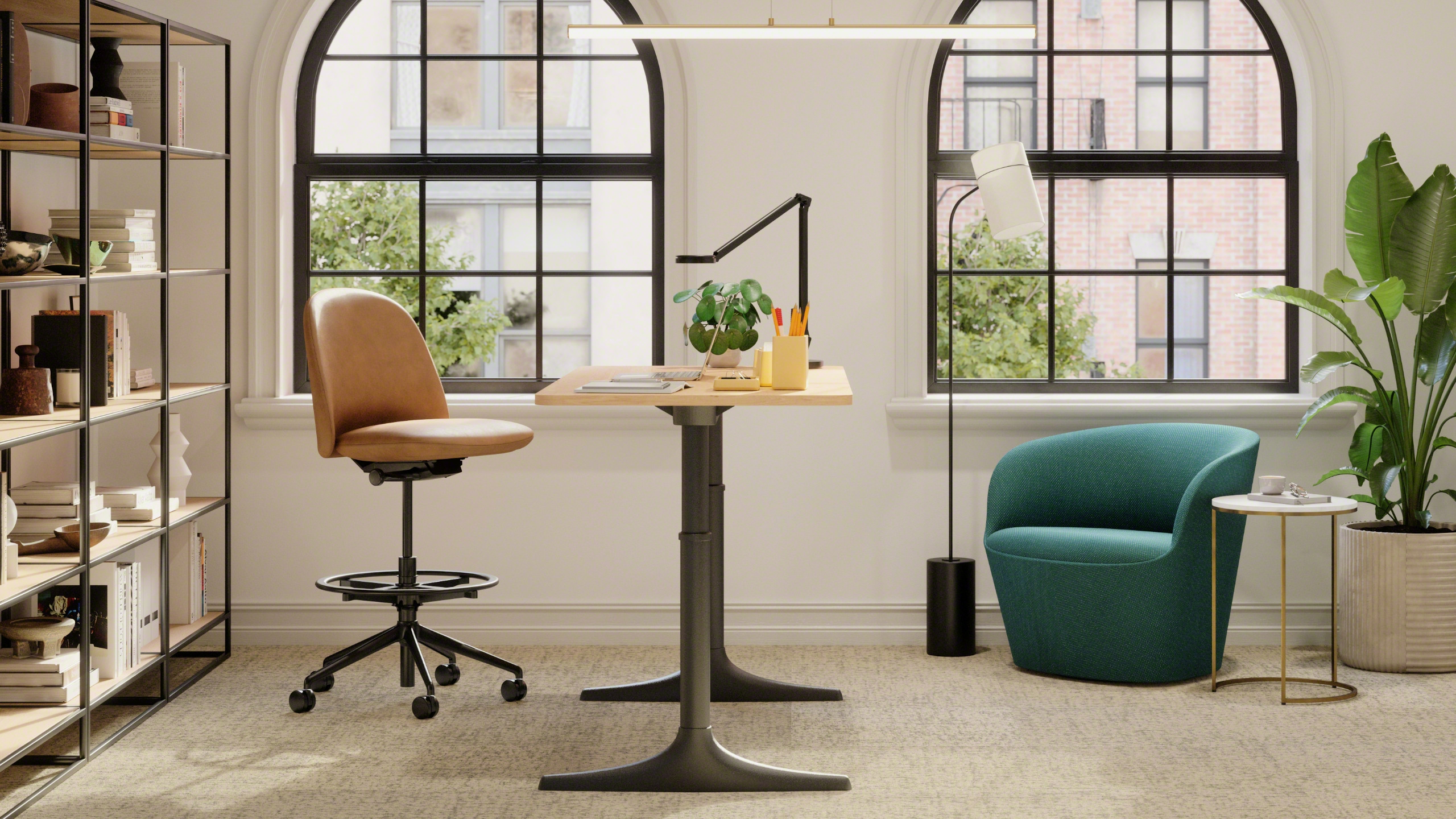
There’s a real difference between a room with the right furniture and a room that’s genuinely set up to support daily work. Knowing How to Set Up a Home Office properly means thinking beyond just where things sit. Lighting at every workstation, outlet placement, cable management, and whether the scale of your furniture actually fits the room’s dimensions all play a meaningful role.
Oversized pieces are a problem we see consistently. A desk that looks impressive in a large showroom can make a smaller space feel impossible to navigate. Right-sized, adaptable furniture performs better in compact settings, and it often comes with a lower price tag as well.
Ideas That Solve Real Problems
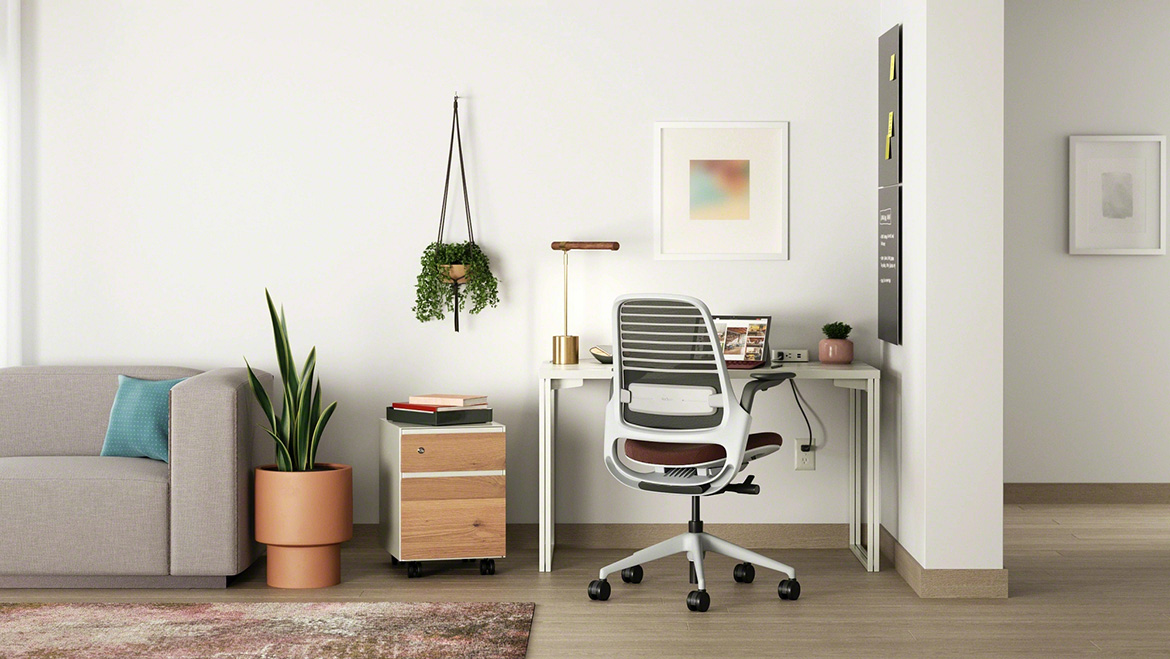
The best Home Office Ideas aren’t only about making a space look attractive. They address real functional challenges. A compact desk with built-in drawers can eliminate the need for a separate filing cabinet entirely. A chair like the Steelcase Node Chair, which features personal storage beneath the seat and rolls easily across the room, reduces the overall number of furniture pieces needed. Choosing items that handle more than one job is a consistently reliable strategy in any smaller environment.
Think about how the space will feel at the end of a full workday, not just when everything is freshly arranged and looking its best.
Design and Decor Work Together
Strong Home Office Design treats function and atmosphere as a single conversation rather than two separate topics. The layout, furniture materials, color palette, and overall aesthetic all communicate something to the people in the room and to anyone who visits. Those signals accumulate quietly and shape the impression your office makes in ways that are easy to underestimate until you pay closer attention.
Office Decor Ideas that genuinely work in professional settings tend to be purposeful rather than decorative for decoration’s own sake. A carefully chosen wall color can meaningfully improve concentration. Quality materials suggest professionalism without requiring any explanation. Even small visual decisions contribute to the larger story a workspace tells about the people and company behind it.
At Workspace Inc., we remind clients regularly that even a compact office is a real branding opportunity. The environment you create reflects your values whether you intend it to or not.
Ready to Build Something Better?
Workspace Inc. works with businesses across Iowa to create offices that feel deliberate, functional, and worth showing up to every single day. If you’re ready to make your space genuinely work for your team, we would love to help you figure out exactly where to begin. Reach out today.
Frequently Asked Questions
How do I make a small office feel organized instead of cramped?
A thoughtful layout is what separates an organized small office from a cramped one. Clearing natural walking pathways before placing furniture, positioning desks near windows, and using vertical space like wall-mounted shelving instead of floor space all help a compact room feel open rather than tight.
How should furniture be arranged in a small office layout?
Start by thinking about movement — where people naturally walk when entering the room and which areas see the heaviest use. Keep those pathways clear, position desks near windows to reduce eye strain, and place shared equipment like printers where it’s accessible but away from primary workstations.
What’s the best way to set up a small home office?
Setting up a home office properly goes beyond furniture placement. Lighting at every workstation, outlet placement, cable management, and choosing furniture that’s actually scaled to the room’s dimensions all play a meaningful role. Oversized pieces that look great in a showroom often make a small space harder to navigate.
What furniture works well in a small office?
Multi-function, right-sized furniture performs best in compact settings. A compact desk with built-in drawers can eliminate the need for a separate filing cabinet, and a chair like the Steelcase Node Chair, which includes personal storage beneath the seat and rolls easily, reduces the overall number of pieces needed.
Does office design affect how professional a space feels?
Yes. Layout, furniture materials, color palette, and overall aesthetic all communicate something to the people in the room and to visitors. A carefully chosen wall color can improve concentration, and quality materials suggest professionalism without requiring any explanation — even a compact office is a real branding opportunity.