
Light, sound, plants, ergonomics, and equal treatment for hybrid teams: how office design shapes well-being.
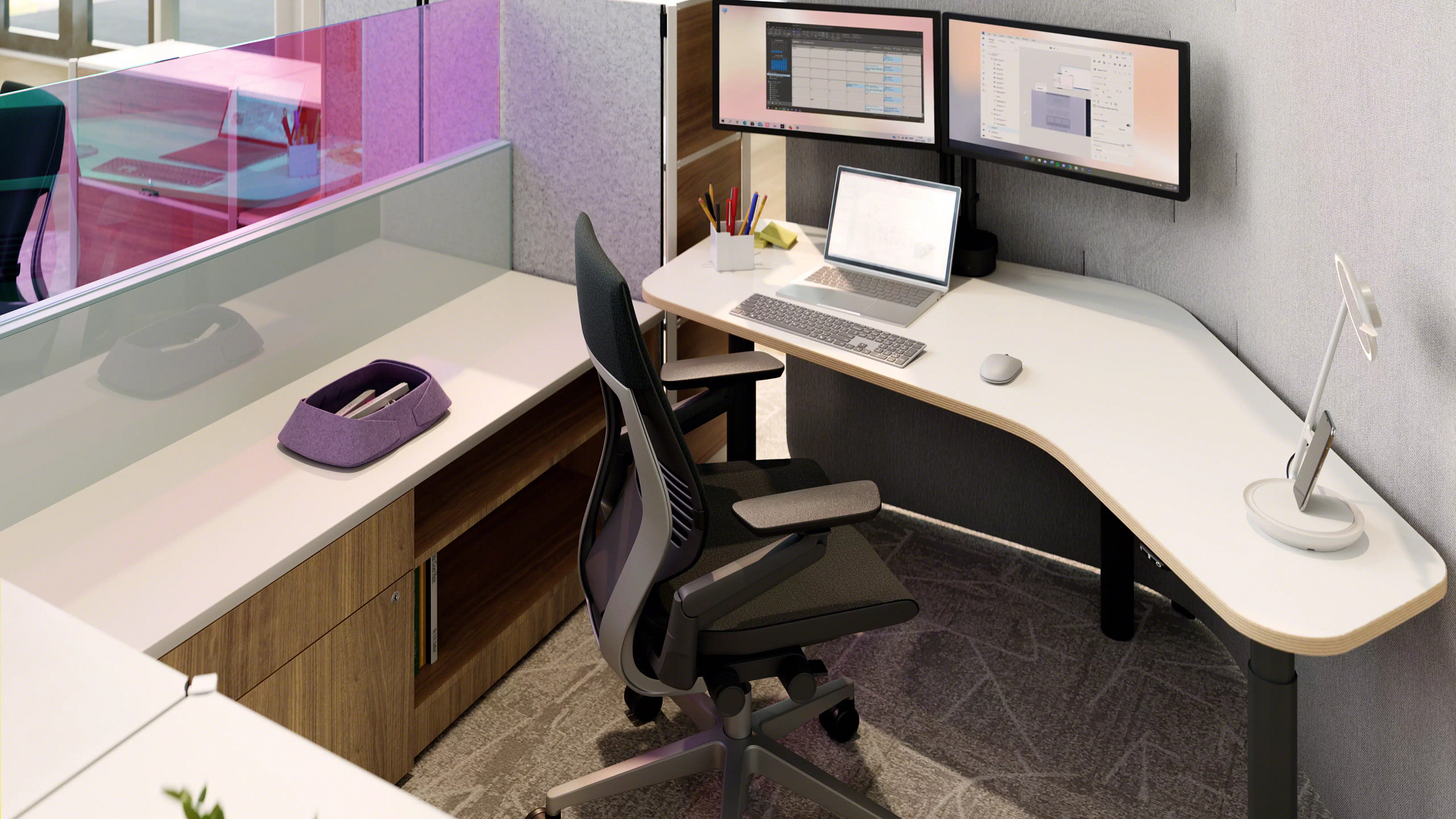
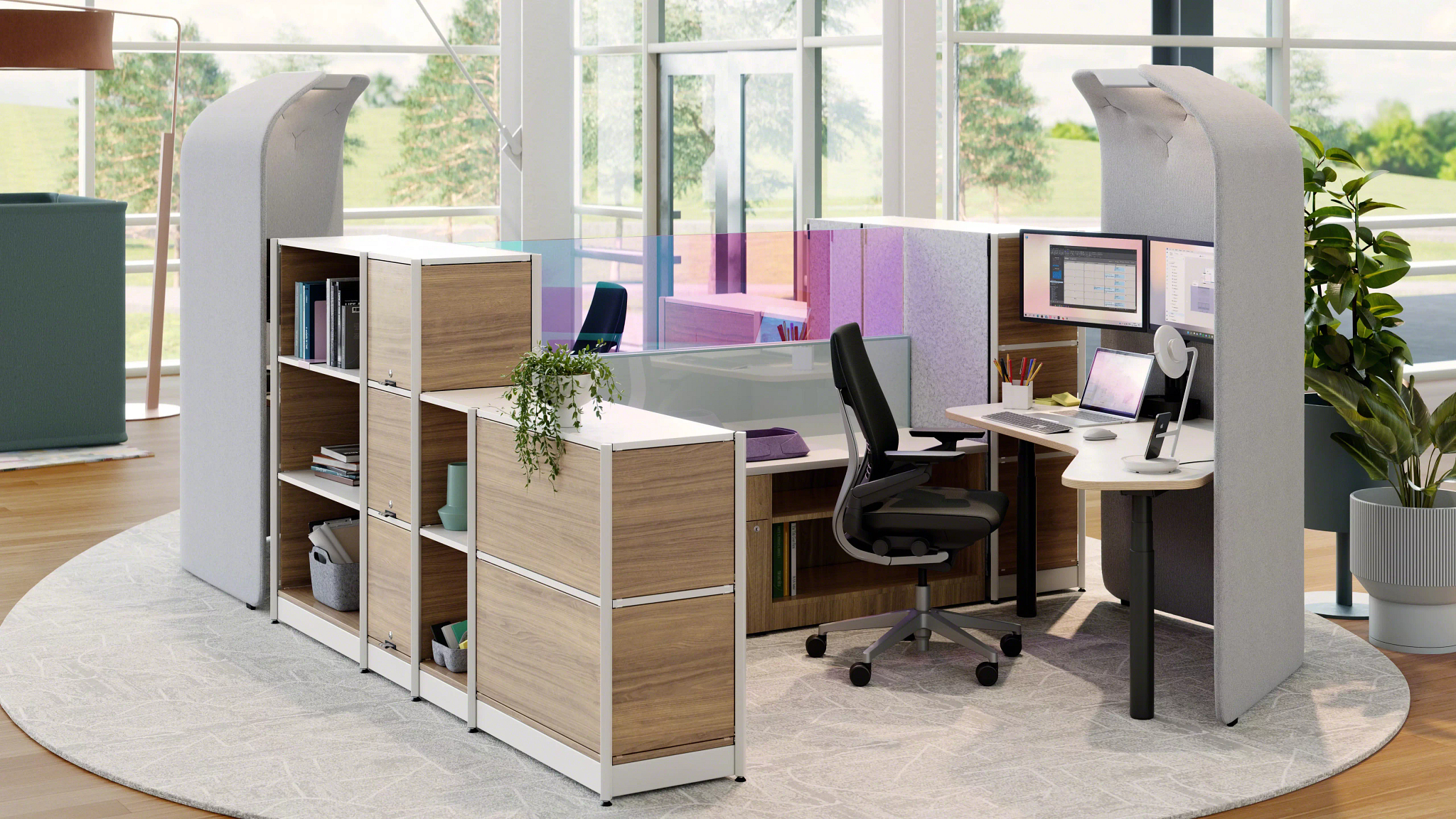
At Workspace Inc., we’re concerned about how to design an office space and the best office layouts. Many businesses invest heavily in employee benefits, technology, and other workplace enhancements but fail to provide other workplace amenities, such as comfortable and functional furnishings that have not been ergonomically tested in years. Research supports our views. Ninety percent of respondents to a survey conducted by the American Society of Interior Designers said office design affects job performance. Eighty-eight percent of respondents to a survey conducted by design firm Gensler said office design affects job satisfaction. Employee well-being should be a key concern for you. Office design plays a key role in employee well-being.
Here’s how to design the best home office layouts or office ones.
Natural light is the most valuable investment a business can make in its interior design.
Key Takeaways
Begin with Light, Since Everything Builds on It
Natural light is the most valuable investment a business can make in its interior design. Studies from 2025 and 2026 indicate employees who work in spaces with natural light report 15% greater well-being and 6% higher productivity. Additional advantages of natural light include less eye fatigue and improved energy and sleep patterns for employees during the workday.
The functional approach to solving this problem includes placing office cubicles near windows and removing other interior walls to increase light exposure for workers on every floor. Other functional approaches include adding tunable LED lights with color temperatures that simulate outdoor light at various times of day. Daytime LEDs have cooler color temperatures that may be more stimulating. Afternoon LEDs have warmer color temperatures. These ideas are grounded in physiology rather than current design practices.
Daytime LEDs
Cooler color temperatures that may be more stimulating.
Afternoon LEDs
Warmer color temperatures.
If you are building a new office or remodeling an existing office, the first step should be to improve lighting. Lighting improvements will help other efforts to improve the office.
Remedy Noise Problems Before Others Remedy You
Acoustic and other sound privacy concerns consistently rank as the most poorly addressed design feature in offices globally. Acoustic concerns are a major issue. Noise complaints are the most frequent complaints about lost productivity in open offices. There are other strategies to reduce noise problems in offices besides physical barriers.
Strategies for improving sound quality include installing acoustic ceiling tiles and other sound-absorbing fixtures and furniture and forming quiet, enclosed spaces and areas. Reservable individual workspaces can also be provided. Benefits of offering privacy and quiet workspaces to open-office employees include privacy. Open-office design is incomplete without these features.
Absorb
Acoustic ceiling tiles and other sound-absorbing fixtures and furniture.
Enclose
Quiet, enclosed spaces and areas.
Reserve
Reservable individual workspaces.
The best office layouts address both communication and individual work needs. Office space suitable for team collaboration and located near workers with whom they frequently interact should be provided, along with private rooms that team members can reserve for private work. Both team and individual work needs are met.
Bring Plants Inside to Help Reduce Stress
When you’re looking for office or home office layout ideas, consider bringing the outdoors in. It has research and other evidence to support its use. Research studies show that incorporating plant design in office environments can boost productivity by up to 15%. According to a 2026 report by the British Safety Council, average levels of CO2 in office buildings can impair cognitive function. Facility managers and designers should be aware of and take steps to improve indoor air quality.
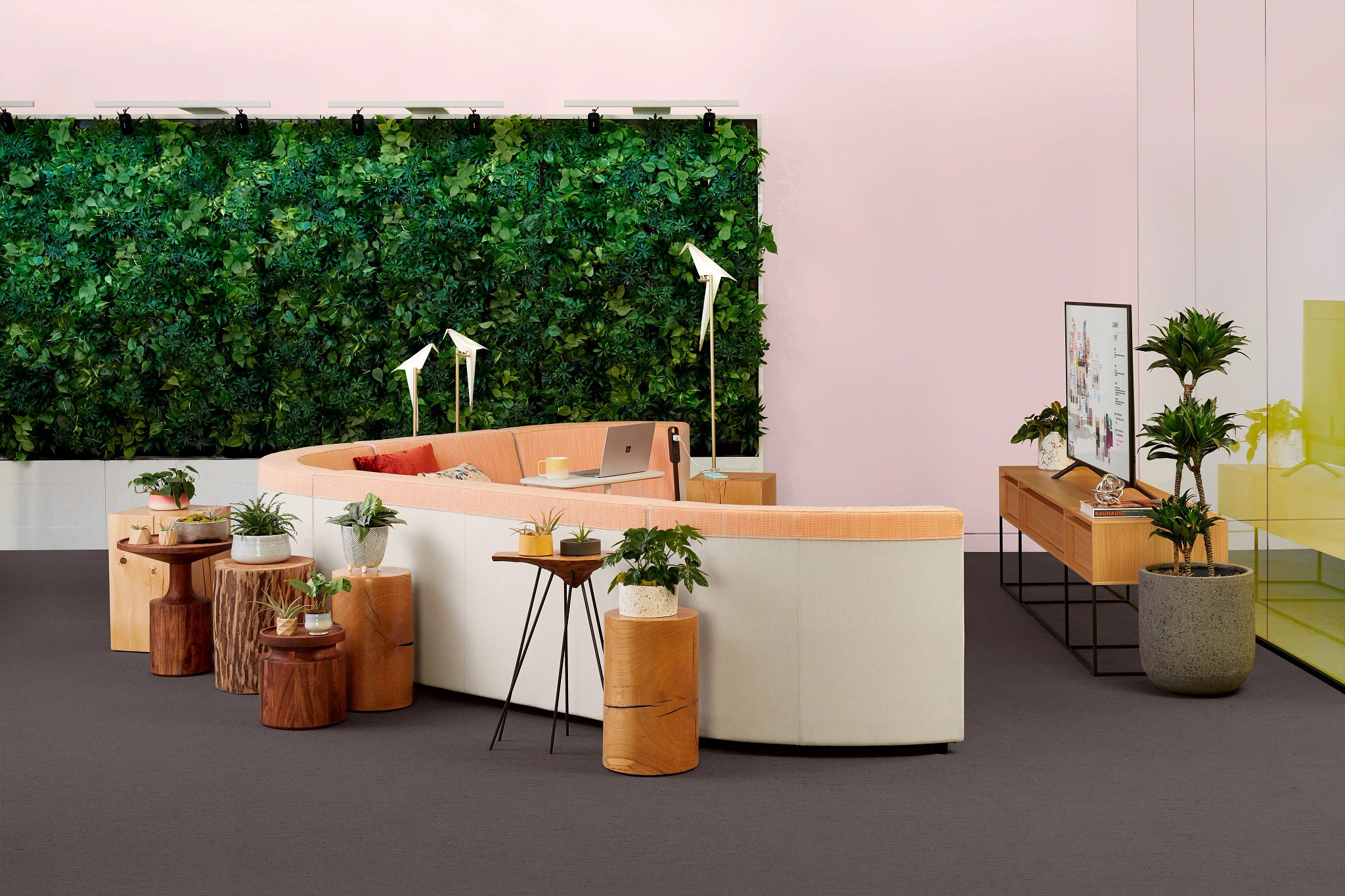
Implementation ideas are diverse. High-cost approaches might include adding living walls, water features, and other natural elements indoors. Low-cost approaches might include adding indoor plants in select areas, improving outdoor views and airflow, adding wood products, and selecting paint colors that don’t make the space feel like a metal file cabinet. Options for implementation differ by budget.
Higher-cost approaches
Lower-cost approaches
Ergonomics Isn’t Just About Your Chair
Ergonomic design involves a system. Elements of the system include sit/stand desks that can be raised or lowered, desk aids that optimize viewing distances, 35 to 50 foot-candles of task lighting, anti-fatigue mats at sit/stand desks, and temperature controls between 68 and 76 degrees Fahrenheit. Small system changes can have significant effects on comfort at 3 p.m. compared with 9 a.m. each day and over time in a year.
Remote and Hybrid Employees Deserve Equal Treatment
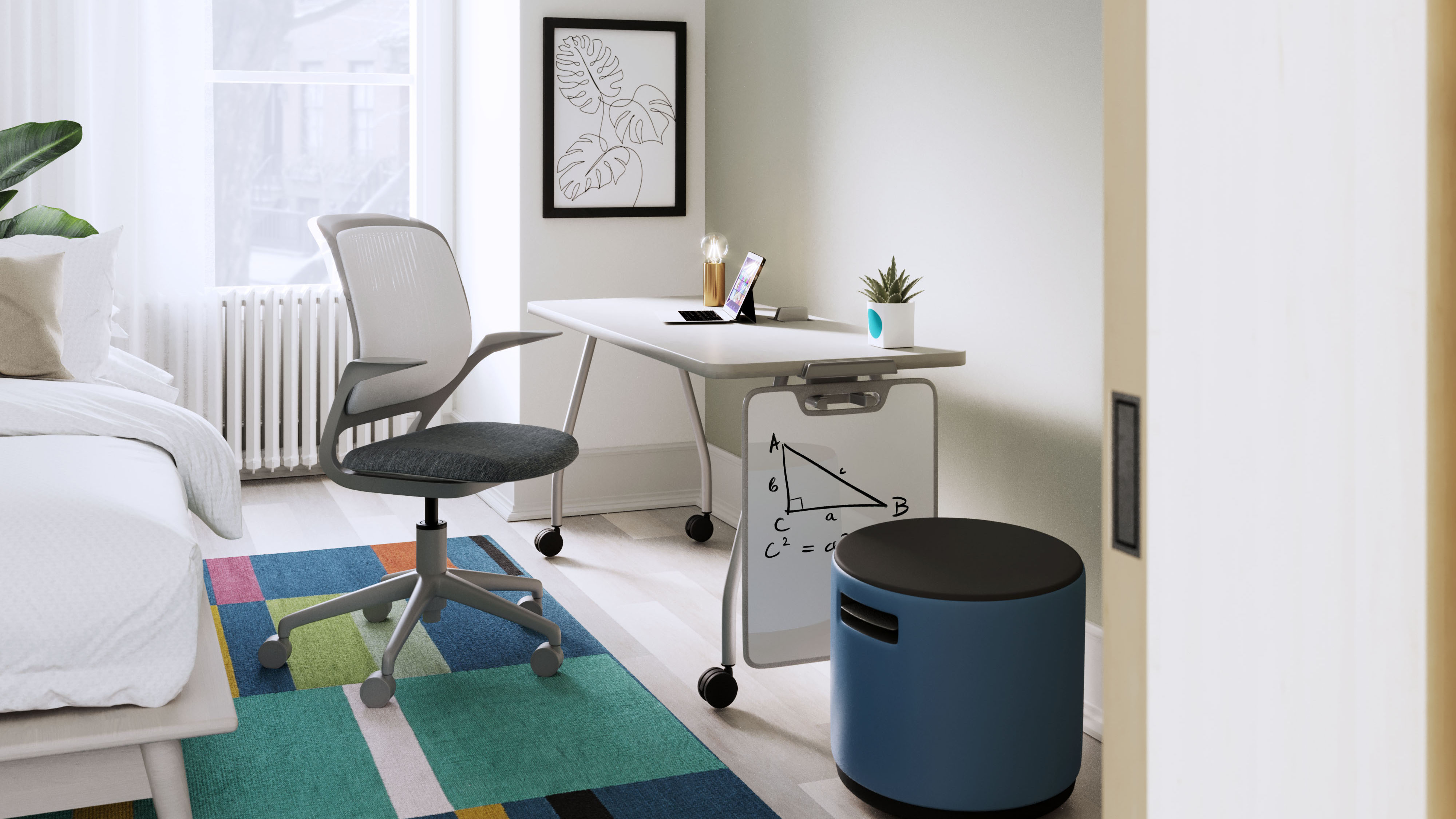
Wellness programs shouldn’t be restricted to in-office workers. Benefits and other wellness supports should be available to telecommuters and other hybrid workers. You may want to provide materials and information to telecommuters about home office design to connect them with wellness benefits. Tips and advice on designing home offices in bedrooms and other living spaces can show telecommuters that you value their well-being, despite their distance from the office.
Sharing home office guidance with remote teammates? Our home office design guide is a good place to start.
Designing for Health Is a Competitive Strategy
A business issue, not an HR issue.
Workspace Inc. argues that improving the workspace is a business issue, not an HR issue, with many benefits for employee engagement and retention. A 2026 study by Gallup estimates that $10 trillion of global economic value is lost annually because of low employee engagement. Strategies for improving workspace engagement do not include completely redoing the workspace. Treat the workspace as you would other tools in the workplace to help employees with their work and take daily actions to show employees that you value them.
Ready to Design a Workspace People Thrive In?
Talk with Workspace Inc. about furniture, layout, and design that supports your team’s well-being.
FAQ
▾How does office design affect employee well-being?
Office design plays a key role in employee well-being. In a survey by the American Society of Interior Designers, 90% of respondents said office design affects job performance, and 88% of respondents to a Gensler survey said it affects job satisfaction.
▾Where should I start when redesigning an office?
Start with lighting. Natural light is the most valuable investment a business can make in its interior design, and lighting improvements will help other efforts to improve the office.
▾How can I reduce noise in an open office?
Install acoustic ceiling tiles and other sound-absorbing fixtures and furniture, create quiet, enclosed spaces, and offer reservable individual workspaces. Pair team collaboration space near the people who work together with private rooms that can be reserved for focused work.
▾What does ergonomics include besides a good chair?
Ergonomic design is a system: sit/stand desks that can be raised or lowered, desk aids that optimize viewing distances, 35 to 50 foot-candles of task lighting, anti-fatigue mats at sit/stand desks, and temperature controls between 68 and 76 degrees Fahrenheit.
▾How can I support remote and hybrid employees’ well-being?
Make benefits and wellness supports available to telecommuters and hybrid workers, and share materials and tips on designing a home office in a bedroom or other living space.