

Office reconfiguration can reshape how your employees experience the workplace. There are several reasons to go through a reconfiguration. It can help adapt to hybrid schedules. It can accommodate growth or downsizing. It can simply be a refresh of the office environment. No matter why you set out to do it, the process can feel daunting. You need a clear plan for a smooth reconfiguration, so it doesn’t disrupt operations or frustrate your employees.
In this post, we’ll outline some common pitfalls you should avoid and provide practical steps to keep the transition smooth.
Contact Us for a Plan Learn More about our Services
Why Companies Are Reconfiguring Offices
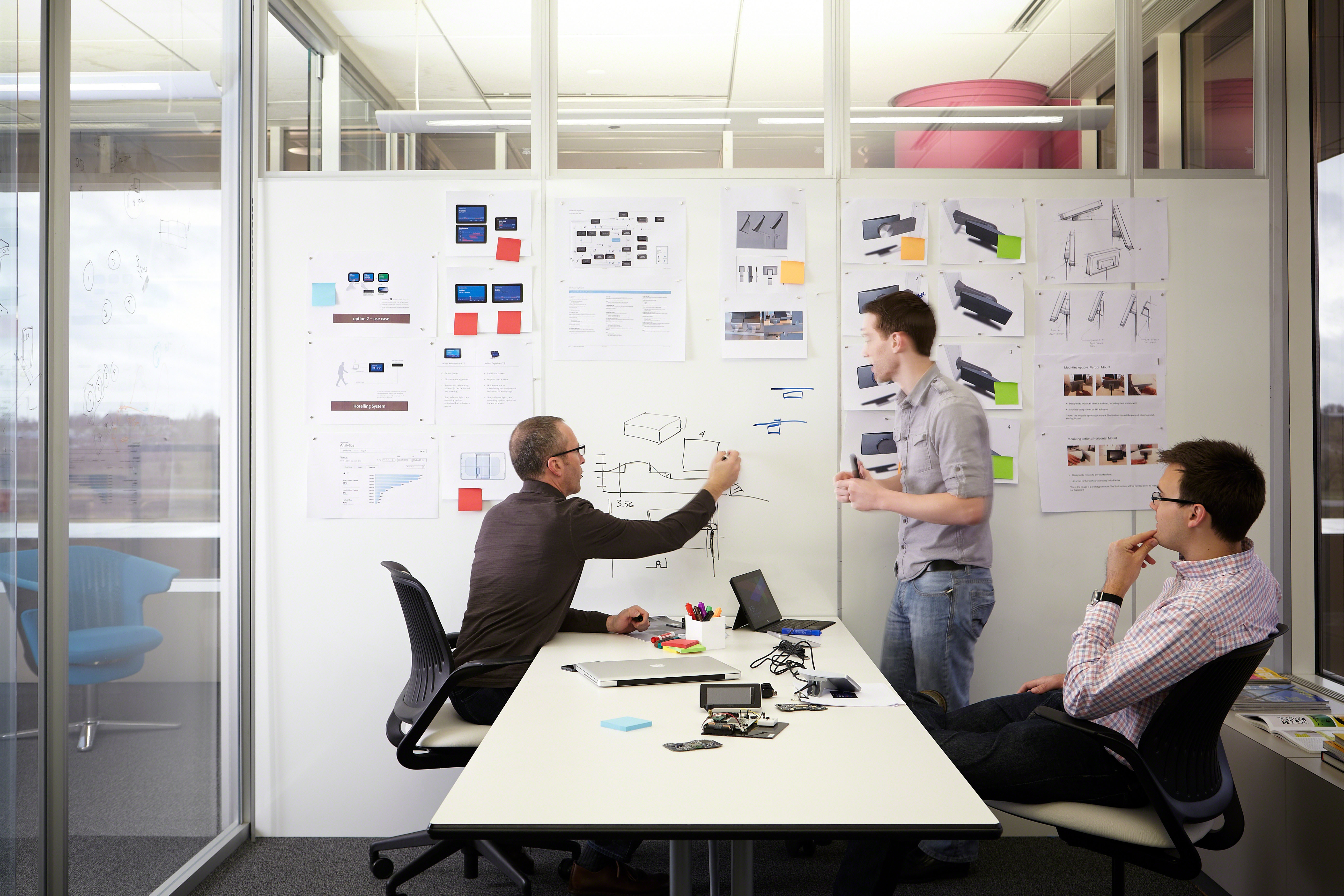
Office layouts aren’t meant to be “carved in stone.” As organizations evolve, the spaces they occupy need to change as well. One of the biggest drivers of office reconfiguration today is the shift to hybrid work. Companies are learning to balance remote schedules with in-person collaboration. That often means rethinking how much space is dedicated to individual tasks versus shared work areas.
Changes in workforce size are another common reason. A team that increases in size might need more workstations and storage. If a company is consolidating locations, it might prioritize multi-purpose zones that make the most of a smaller footprint.
Culture also plays a role. Businesses increasingly want their offices to reflect transparency or innovation. Office furniture reconfiguration allows them to create environments that reinforce those ideals.
Finally, technology innovation is reshaping office layouts. Organizations are looking for features like videoconferencing setups and furniture that support mobile devices. Offices need to be able to accommodate tools that weren’t part of the picture a decade ago.
Common Pitfalls in Office Reconfiguration
Without careful planning, office reconfiguration can cause problems. One of the most common pitfalls is trying to rush the process. Moving furniture and teams can lead to downtime and frustration. Another mistake is overlooking employee input. Staff are the ones who use the space every day. Ignoring their feedback can result in layouts that look good on paper, but don’t support real workflows.
Companies also tend to underestimate the role of furniture and storage. Reusing outdated pieces or failing to plan for things like lockers or ergonomic surfaces can leave the new layout feeling incomplete. Another thing to keep in mind is that businesses shouldn’t treat reorganization as a one-time fix. Workplaces are evolving continuously as new technology arrives, team sizes shift, and work styles change. This demands flexibility and a plan for ongoing changes.
Steps to Plan a Smooth Reconfiguration
- Assess your current space
Start by identifying areas that could benefit from reconfiguration. Which spaces are underused or overcrowded? Which ones are no longer serving their purpose? Our experts can do a walkthrough to highlight opportunities to make better use of your square footage. - Engage employees early
Staff insights are invaluable for this process. Ask what frustrates them about the current layout, and what would make their days easier. Incorporating their feedback ensures that the new design will reflect reality, rather than assumptions. - Set clear goals
Define what you want the reconfiguration to achieve. Are you looking for greater flexibility? Improved collaboration? Better integration of technology? Clear goals can help guide your decisions and prevent the project from becoming a cosmetic shuffle. - Create a phased plan
A reconfiguration doesn’t have to happen all at once. Spacing out the changes can minimize disruptions and keep operations running smoothly. We can help you map out a timeline that fits your business rhythm. - Partner with experts
We’ve been creating effective workplaces for almost 90 years. Professional guidance through a reconfiguration can keep the process aligned with your long-term needs. We’re here to help you make the transition seamless from start to finish.
Design Considerations for Reconfigured Offices
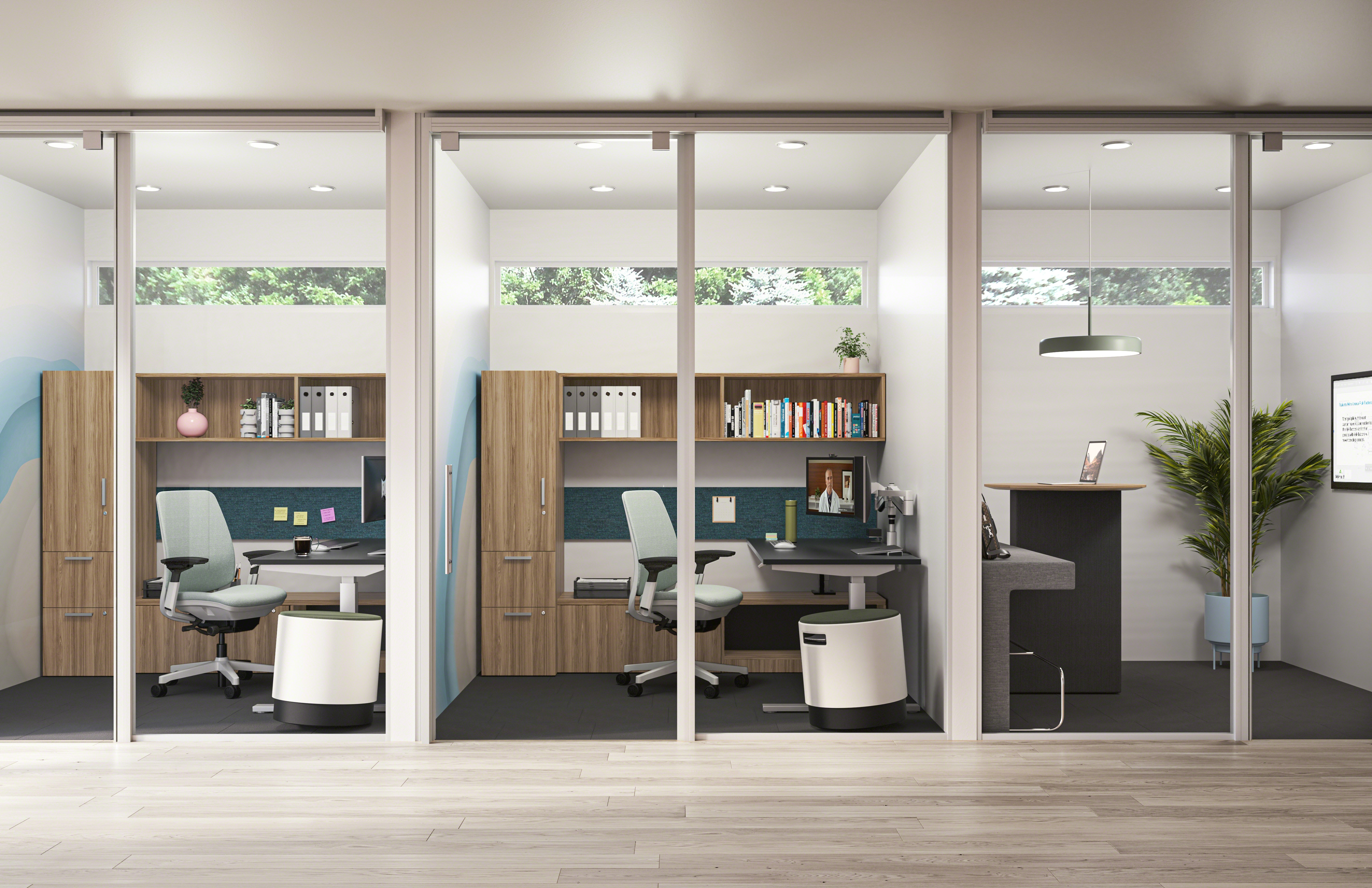
The goal is to reshape your office space to work smarter. Flexibility should be built in from the start, so that layouts can shift as teams change size or priorities. Balance is also important. Open areas can encourage interaction, but your employees also need quiet areas to concentrate. Lighting, acoustics, and traffic flow all affect how workers feel in the space.
And don’t forget technology! Things like power access, reliable Wi-Fi, and ergonomic surfaces can make the difference between a space that looks good and one that actually supports work.
Workspace, is here to help you weave these elements together. If you’re ready for an upgrade that makes your office feel like it was designed with people in mind, get in touch with us to schedule a consultation.
Contact Us for a Plan Learn More about our Services